
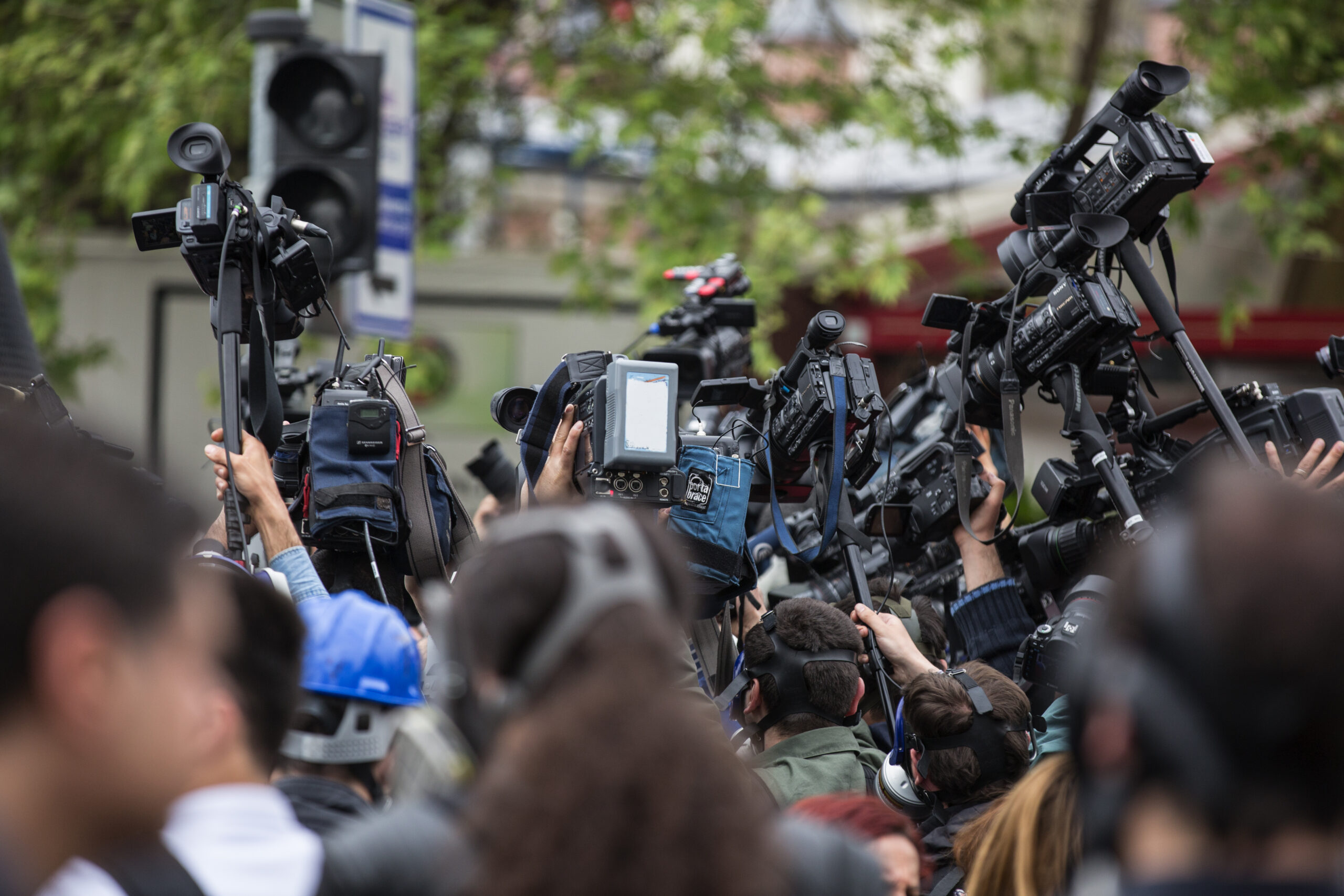

Citizen journalism is journalism done by people who are not journalists. It includes people recording and reporting on events, fact-checking, and posting stories about news items. That’s important because smartphones, blogs, live streams, and social media sites allow everyday people to share footage of what they’re witnessing before a professional journalist arrives at the scene.Citizen journalism may broaden the coverage of news, demonstrations, urban change, and crisis situations, but it may also raise ethical, privacy, safety, and legal issues.
What Is Citizen Journalism And How It Differs From User-Generated Content
In short, citizen journalism involves public individuals collecting, recording, analyzing, or disseminating news material. It may also be seen as a form of participatory journalism, since the public does more than merely respond to preexisting stories. A citizen might film a traffic stop, create a local food safety blog, post verified storm-damage information, or stream a city council meeting online. The question is not whether the person is a professional journalist. The question is whether they are doing journalism.
Imagine a citizen filming a flooded underpass, noting the time and place of the flooding, and sending the footage to their local news organization or community alert system. That would qualify as citizen journalism. However, if the footage were a humorous video, a vacation snapshot, or an opinion piece without journalistic substance, it would not be considered citizen journalism.
Most people fail to recognize that the medium is not the crucial element. What counts is the intention and the fact-checking process. Citizen journalism could take the form of a blog, a tweet, a picture, a video, a live broadcast, an e-newsletter, an eyewitness report, or a group effort. It only qualifies as social media journalism if it provides insight into a significant event and is not simply intended to grab attention.
Early Public Reporting Before Digital Media
But this isn’t just a modern-day problem. Stefanie Markovits’ article about the Crimean War and “rushing into print” makes a similar point. A witness can get out to the public much more quickly, but he can also leave behind his fact-checkers. This “rushing into print” is the issue we face today: We have a viral clip, but we don’t know who filmed it, or where it was filmed, or what happened before it was filmed.
Some early examples of citizen journalism were letters, broadsheets, eyewitness narratives, and public speeches, all circulated alongside more traditional means of communication. While this wasn’t instantaneous, it meant more people had access to news sources, and put additional pressure on the press and the general public.
Think about that for a second. The medium changed, but the compromise did not. As war reporting advanced over time through telegraph, photographs, radio, television, satellite transmissions, and video on mobile phones, each innovation allowed the viewer to be closer to the story. But each innovation also introduced issues of accessibility, censorship, propaganda, and verification.
OhmyNews And The Rise Of Networked Public Reporting
A good example of this today comes from South Korea with OhmyNews which set out to create a community of citizen journalists. Inkyu Kang places this in the context of journalism, rather than simply a new technological development. This is a significant point, because it means that OhmyNews had a clear structure for citizen involvement, with editors overseeing contributions.
This means that articles from citizen journalism would be subject to some form of editorial process, whereby citizen contributors would submit reports, editors would select them, and published material would appear on the site. This helps to distinguish a more organised approach to citizen journalism from other forms of uploading, where it is less clear whether anyone has checked the reporter’s identity, location, motives, or omissions.
This does not, however, mean that they would necessarily be accurate, fair or free from prejudice. It does, however, change the starting point for information gathering and determine who can decide what should be reported. Editors will still be important in that they will choose what contributions are to be used, what constitutes supporting evidence, and whether a citizen journalist’s version needs to be balanced, amended, or is a matter for the lawyers.
Independent Online News And The Public Sphere
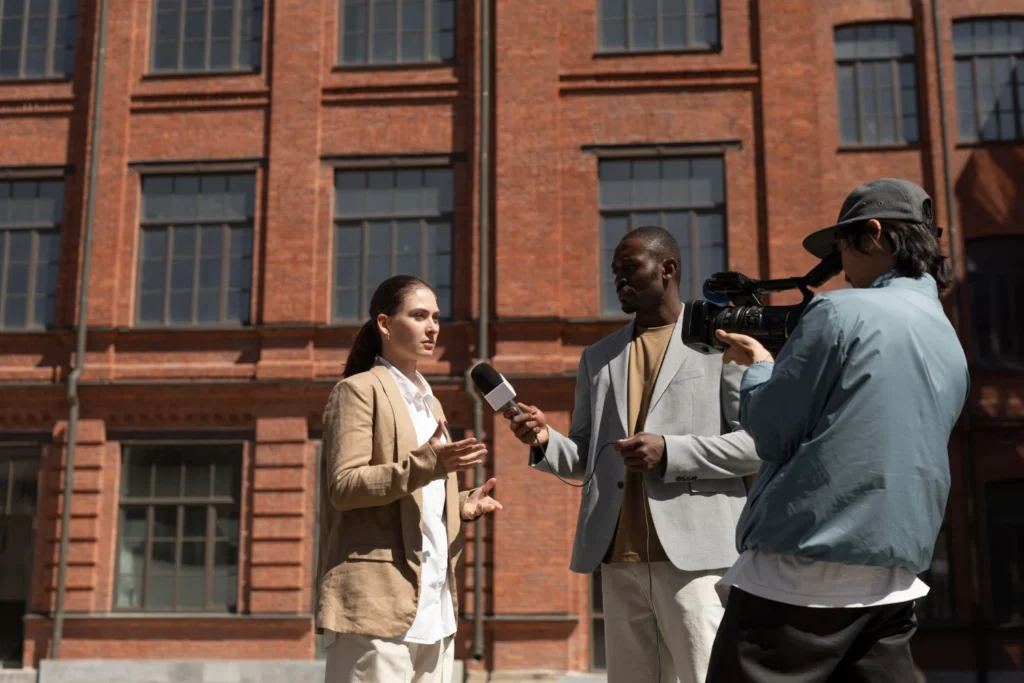
The rise of independent web publishing offered space for local citizens, community members, subject matter experts, and supporters of particular issues to produce their own journalism, free of mainstream commercial outlets. David Beers is useful for this conversation because he explains how independent online journalism gives the Internet a role as an alternative medium that covers topics not covered or covered poorly by mainstream news.
Not every individual blog turns into an independent journalism enterprise. Independent journalism must be grounded in research, analysis of documents, interviews with people, or personal experience. A housing blog about evictions, a newsletter about accessibility for disabled riders, or a civic site that covers local education board meetings can supplement the work of mainstream newsrooms that have cut their local coverage.
This matters because it opens doors for engagement. If people affected by government action can gather their own information, ask their own questions, and find their own audience, there is no reason they should need to depend on corporate gatekeepers. This is different from social media posts that have no apparent goal of informing the public or establishing truth.
How Established Newsrooms Manage Public Contributions
Most large news organizations take audience contributions because it’s likely the public are the first to see something. BBC is a good example of a traditional news organization that has learned to handle audience photos, video, tips and comments, and then make decisions about whether and how to use them. While the public may make the initial report, the editorial team decides whether and how to use it.
That is a form of gatekeeping, and can be a responsible form of gatekeeping when it is done openly. Editors might look at the metadata, look for landmarks they recognize, contact the person who made the video, look up the weather or traffic conditions, and ask if the video has been published elsewhere. They also decide whether the showing of a face, a wound, a license plate, or an address might cause harm.
In practice, what does this mean? You can’t assume that a public contribution is accurate just because a big news outlet re-posted it in short order. Look for signs that an editor has taken care of the submission: a named location, attribution text, corrections, content warnings, or cautious language in cases where the facts are not yet clear.
Reporting Formats: From Blogs To Livestreams
Beyond the immediacy of cell phone activism there are also slower media formats which document the conditions of food, housing, healthcare and other local services.
- Public-interest blogs: Food bloggers could shift their attention from restaurant critiques to reporting on health inspections, food shortages, changes to school lunch programs, or low-cost grocery options.
- Eyewitness social media posts: Social media posts could alert others to a fire, flood, arrest, road closure or protest, including details of when and where it happened.
- Photo essays: Photographs could capture devastation, large groups of people, signs, injuries, environmental contamination, or the presence or absence of something following an incident.
- Livestreams: Videos that are broadcast live can allow people to watch an event, but viewers need to know that any events that happen before or outside of the frame are not visible.
- Community newspapers and bulletins: These can highlight information on local government sessions, housing costs, school changes or medical warnings, which are not widely covered by larger news networks.
- Citizen-tip networks: Residents within an area can communicate about outages, immigration enforcement actions, transportation strikes or building damage, and then compile their information together.
- Phone videos in conflict zones: Phones can be used to capture footage of war or fighting, but shooting from far away puts individuals who appear on camera at risk.
Local Reporting On Urban Change And Gentrification
Neighbourhood-led journalism is especially valuable when changes to the built environment are being communicated purely through property, lifestyle and investment language. As the case study of gentrification in Brixton shows (2011 to 2022), community-focused reporting is needed to safeguard local memories, document fears of displacement and follow how people’s experiences of changing retail outlets, rents, policing, amenities and public spaces are evolving.
In this respect, Janet Jones and Stéphane Sadoux give us a useful way of conceptualising how Brixton, residents’ views of its evolution and narratives of exclusivity relate to each other. What is important is not simply that local people hold views about this kind of urban change. It is that residents are often ahead of outside journalists in identifying what venues are shutting up shop, who feels disconnected, and what counts as improvement.
And yet, this is only part of the picture. Although this mode of reporting does not compare with war correspondence, it again illustrates the worth of proximity to events. Those who are within communities can report on things that lie outside the field of vision of outsiders, but it may also lead them to develop strong opinions, requiring readers to distinguish between experience and claim.
Crowdsourced News In Corporate-Dominated Media
If more individuals are able to contribute evidence, tips, and on-the-ground reporting, crowdsourced news can act as a check on monopolistic media. Crowdsourcing would likely be most effective if many people document their own experiences with a wider public issue (for example, power outages across a city, voting conditions at specific polling places, access to infrastructure after a natural disaster).
Also, it’s important to note George Lăzăroiu’s research on mass communications. The emergence of public sourcing comes in the wake of corporate media organizations determining which information citizens see. Corporate media offer certain benefits (more resources, legal backing, professional editors) but also certain disadvantages (they may give disproportionate coverage to politicians, prioritize subjects that benefit corporations, emphasize stories that appeal to audiences nationally as opposed to locally).
The practice of public sourcing cannot prevent the issue of corporate media agenda-setting. Some kinds of content will probably be more prominent on social media. Users might conspire to generate false content. Journalists may still select clips from a narrow set of subjects they are accustomed to covering. The question for the public sphere is how transparent these outlets are: who is producing the content, how it has been checked, what details are not available, and whether the public is allowed to participate in the conversation.
Social Media During Protests And Uprisings
In protests in Iran, Egypt, and Libya, public posts gave viewers access to images that governments and state-controlled media were unwilling or unable to provide. At Syracuse University, the question of how to cover political protests often comes back to this problem: Social media allows networked witnessing, but such reporting can put reporters, activists, and witnesses in danger.
Researchers Sadaf R. Ali and Shahira Fahmy discuss how the coverage of political protests intersects with information gatekeeping. A photo of a protest may be used to document police violence, show public outrage, or spread misinformation. A video clip of a riot officer swinging a baton may hide previous actions, the setting, or the purpose of the uploader.
Eyewitness videos, however, are both evidence and vulnerability. Posts can highlight violations of rights, give voice to those without influence, and challenge false claims. They can also show faces, streets, institutions, and home addresses. The question is whether the story would be better told by making an incident clearer to the public or exposing a vulnerable individual to further harm.
Gatekeeping In Protest Coverage
During unrest, visibility is controlled by several gatekeepers. Sites determine what posts to highlight, boost, label, or remove. Also, editors determine which footage, quotes, and accusations they want to feature.
Lastly, fact-checking can fill in those gaps. Reporters can verify locations, analyze additional video, contact the original poster, and avoid identifying people who might be threatened. Audiences also become gatekeepers by reposting an unknown video as though it were true.
Cell Phone Activism And Conflict Documentation
The impact of mobile phones on the documentation of conflicts: The mobile phone made it unnecessary for a film crew to capture images of death, destruction and everyday survival. In Syria, cell phone filmmaking is a way to document an emergency situation, as well as a way to reach an audience beyond the conflict. Chad Elias’ “emergency cinema” concept provides a framework for this form of cell phone production, framing it as testimony and urgent cultural production.
Because of their proximity, cell phone videos have the potential to capture an audience, and viewers may be more likely to watch a disturbing hand-held video of a bombed-out street, hospital hallway, bread line, or live shells crashing outside their window than they would an official press statement.
Cell phone videos raise questions of privacy and consent. The images displayed could inform and mobilize the public, but they could also humiliate the victims and their families, or risk retaliation against the subjects. When dealing with cell phone videos from a humanitarian crisis, editors must ask themselves: Who is seen? Can the victim or subject be identified? Is there any risk or harm to the subject by publishing the video? Could less intrusive images or footage be used to convey the same message?
War Reporting From Correspondents To Wireless Witnesses
War reporting has always been a function of technology, access, and danger. Greg McLaughlin’s article about war correspondents can serve as a bridge between old school war reporting and newer mobile-first eyewitness war reporting. Traditional war correspondents had to request permission to travel, had to wait for military briefings, had to use cables, cameras, photo editors, and transmission equipment. A cell phone today can record and transmit scenes from areas a foreign war correspondent might not be permitted to travel to.
This provides new avenues of access, but doesn’t eliminate the problems of the old system. The speed of these new transmissions makes verification more challenging. Access is now based on who has a cell phone, who has service, who has a full battery, and who has the inclination to shoot video. Safety could be compromised if the person is identified as an eyewitness by fighters, by a national government, or by an online crowd.
The best comparison is that a professional war correspondent may have more training, more support, and more editorial review, while a local citizen journalist may be closer to the scene, speak the local language, and have better knowledge of how locals act. Both kinds of reporters are equally likely to get it wrong. Good war reporting probably needs eyewitness content and careful research, and the need to clearly state what is not yet known, and to watch out for propaganda.
Public Order Policing And The Rise Of The Eyewitness Recorder
As video is taken for granted, both by the police and by the protesters, the press, and ordinary citizens alike, smartphones have changed the way public order policing works. Central to these issues are Chris Greer and Eugene McLaughlin, whose work looks at the ways that public video and media distribution mediate riots, arrests, and crowd control.
Eyewitness recordings can serve to foster transparency. These can show uses of disproportionate force, how long arrests took, crowd dynamics, or whether the police version of events matches what passersby saw. Or they can distort, by highlighting the flashiest element of an incident while leaving out everything else.
That means “here’s what the data actually shows” is a phrase you can’t use if there is no data, and that is key. In the absence of a comprehensive account, it’s best to treat video as incomplete evidence. What happened before the recording? What or who is off-camera? Is the audio intelligible? Do other videos tell the same story? The rules around recording and police policy are highly variable, and often subject to change.
Health, Homelessness, And Co-Produced Reporting At A Distance
Health, homelessness, and co-produced reporting at a distance Beyond news reporting, this kind of public reporting also happens in research, community and organisational publications. For example, during COVID-19, remote co-production has been a way for affected communities to record their experiences of health, housing, and services, when in-person reporting or research has been more difficult. This method is particularly useful because people experiencing homelessness often have a unique understanding of the obstacles they face.
A co-produced project might incorporate phone interviews, photo essays, text messaging, shared diaries, or virtual workshops. These methods allow us to record information about shelter availability, sanitation, isolation, healthcare, food distribution, and how policies affect people’s lives. What makes this method valuable is the active involvement of people experiencing the issue.
There are some limitations. Remote methods can exclude people who do not have access to devices, charging, private space, or safe internet access. It can also be hard to tell whether the work is journalism, advocacy, or research. Ethical co-production projects will be transparent about informed consent, data storage, participant agency, and whether participants can review how their experiences are portrayed.
Benefits, Risks, And Editorial Responsibilities
By enabling public reporting, news becomes faster, more localised and more accountable. Public reporting brings us news updates even before the official announcement is made. Being able to report directly from a place where no journalists are present can capture the impact of an event, which may otherwise be missed. Public reporting can also capture community knowledge and experiences which may not be reported by media organisations. However, public reporting can expose people to civil liability, for example if they report on something which is not true, reveal someone’s private information, use someone else’s copyrighted material, film or photograph something in a place where filming is not allowed, or photograph someone in a way that may put them in danger.
The public needs to develop a ‘verify first’ mindset, rather than blindly accepting or dismissing content. Is there a specific time and place referenced? Are there other reports to corroborate the story? Does the reporter have a direct connection to the story? Has the reporter updated their post? Laws, regulations and platform policies are always changing. Make sure to review all legal requirements and safety issues before shooting, posting or using someone else’s content.
Editors should protect sources, avoid naming where possible, seek consent when practical and make corrections openly. If we’re not sure about something, we should say so. If new information comes to light, we should amend the story.
Key takeaways
The idea of public reporting is hardly novel. But technology, particularly smartphones and social platforms, has helped make it quicker, more widespread and more visible than ever before. Defining the phenomenon properly requires drawing a clear line between public reporting and the vast sea of user-generated content. Examples of the former include OhmyNews, the BBC’s participatory journalism, news about protests and uprisings, amateur video from Syria and Brixton’s changing fortunes. But there are challenges. How can public reporting be done responsibly? What about issues of verification, gatekeeping, consent and legal risk? The Crimean War provides evidence that there’s no quick fix for balancing speed with accuracy and safety.
Frequently asked questions
What is the concept of citizen journalism?
How can I explain what is citizen journalism in simple terms? Citizen journalism refers to the process whereby ordinary people collect, document, report and distribute information about a story of public interest. This can involve observing an event firsthand, writing down what they see, audio or video recording, taking photos, editing video, uploading to social media or other platforms and passing on other people’s observations. It doesn’t require a person to be employed by a news organization. Claims are most likely to be true when they are contextualized and fact checked and are corrected when errors are discovered.
Is citizen journalism legal?
Whether citizen journalism is legal depends on your country, your jurisdiction, the exact thing being recorded, how it was recorded and how you intend to use it. Privacy legislation, defamation law, copyright law, sub judice legislation, trespass legislation, laws governing police conduct at protests and laws on national security all differ across jurisdictions. Please consult your local laws before recording sensitive topics or publishing information about other individuals or groups.
Who can be a citizen journalist?
Anyone can practice citizen journalism so long as they ethically gather, record, edit or distribute reports on issues of public interest and make those reports available to others in a way that enables them to understand an event or an issue. Being a journalist or having press credentials is not required in order to observe, document, take notes, interview people or publish information. Ethical standards regarding veracity, consent, safety and corrections still apply.
What are some examples of citizen journalism?
Examples of citizen journalism include a local resident recording a video of police officers arresting a man on a street corner; a neighborhood blog that tracks the impact of increases in rental rates; a live streamer documenting police crowd control measures at a demonstration; and someone sharing pictures of storm damage and explaining what happened, including the location of the damage. Some websites such as OhmyNews, BBC Audience Submissions, the Syria phone videos or neighborhood publications such as Brixton Community News may have a degree of citizen journalism, but all need to be fact checked to ensure accuracy.
How can readers evaluate whether a public eyewitness report is trustworthy?
Before sharing citizen journalism, look for a description of what happened, when and where, who did it, what was observed, heard or recorded, how the information was collected and whether it can be confirmed or corroborated by other sources. Look for primary sources. Identify locations through landmark features. Listen for the ambient noise of the location. Read closely for word choices. Question motives for sharing false information or for attempting to provoke an emotional response. Be wary of clips that have been highly edited, anonymous submissions or posts designed primarily to upset readers.
Conclusion
Citizen journalism is most effective when it offers a personal viewpoint, knowledge of local issues, or individual experience that a mainstream journalist might not be able to obtain. Examples include footage of demonstrations, reports from local areas, conflict reporting, personal diaries, and citizen-led studies. However, quick turnaround times and ease of sharing do not eliminate the necessity for fact-checking. Readers should remember that just because someone is participating in a public conversation does not mean they are correct: facts must be properly framed, sources may be protected, and photographs may need careful editing. When done right, this form of journalism can support democracy and act as a complement to, rather than replacement for, traditional media. Make sure you verify recent developments: local legislation, service rules, potential dangers, and updates.